Rare Sights on Galveston Beaches
Countless visitors and residents alike will soon crowd Galveston beaches, and as they lay in the sun, dig in the sand, and wade in the surf, what will they see in addition to sand, water, and rock jetties?
It’s likely they’ll see the common things I have addressed in previous blogs- dunes, wildflowers, ghost crabs, sargassum seaweed, and trash. These sights and others are everywhere and require little effort.
But there are other things on the beach- other things going on- sightings so rare, they remain largely unseen, even by frequent beachgoers. I have seen some rare sights, but only because I have wandered Texas beaches for more than 40 years. I relate below four of the rare sightings I’ve seen.
The first- bioluminescence in breaking waves along the beach. I saw this phenomenon once at night on a west end beach. The waves glowed as they crested and fell along the shore. The light was produced by a single-celled dinoflagellate present in the breaking waves. Unfortunately, I have no pictures to document the event, just a memory.
| Bean Clams, Wide View | Steve Alexander |
| Bean Clams, Closeup View | Steve Alexander |
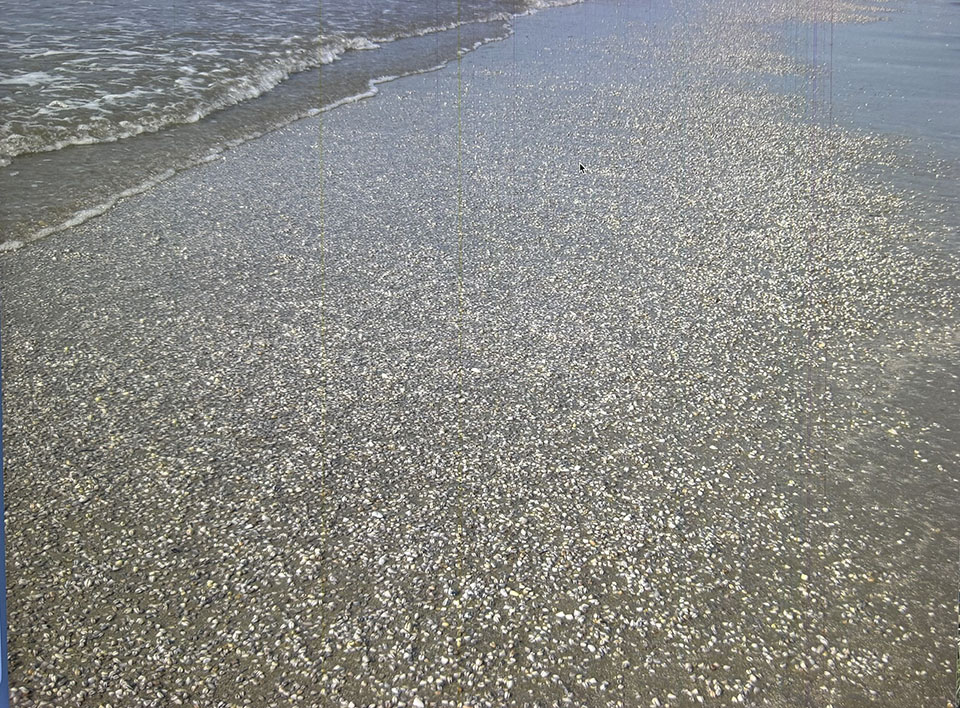
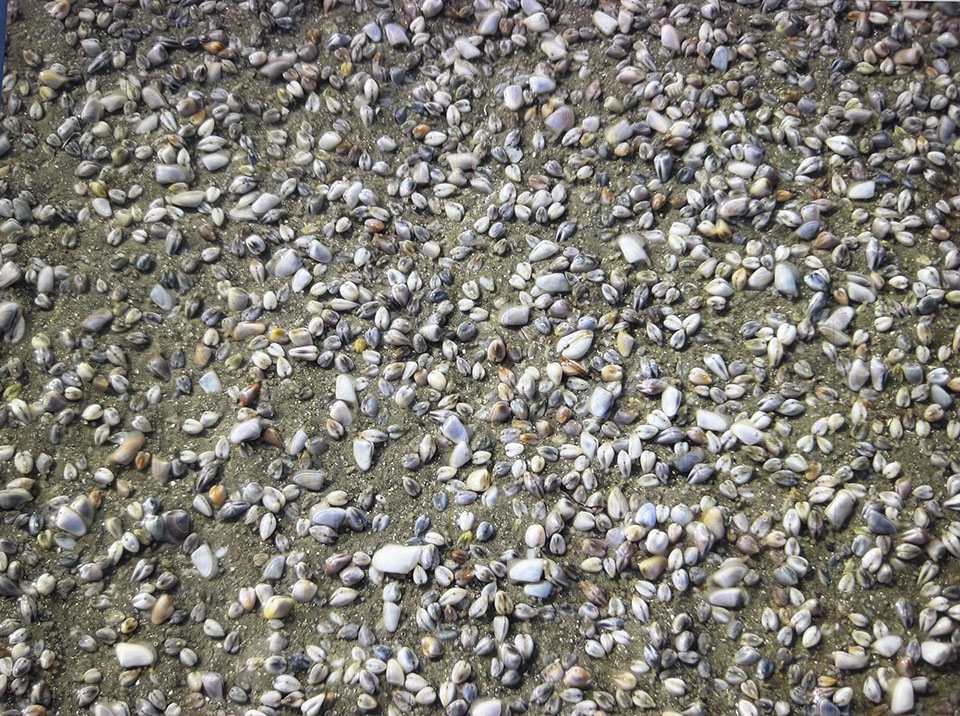
The second sighting- a mass movement of bean clams up the beach by riding an incoming wave (see photo). Just after the wave receded, the clams began to bury themselves in the sand (see photo). They’ll stay there and filter feed until they ride back out on a receding wave as the tide starts to ebb. This daily up and back out movement along the shore allows them to maintain a favorable feeding position.
| Stranded Cownose Ray | Steve Alexander |
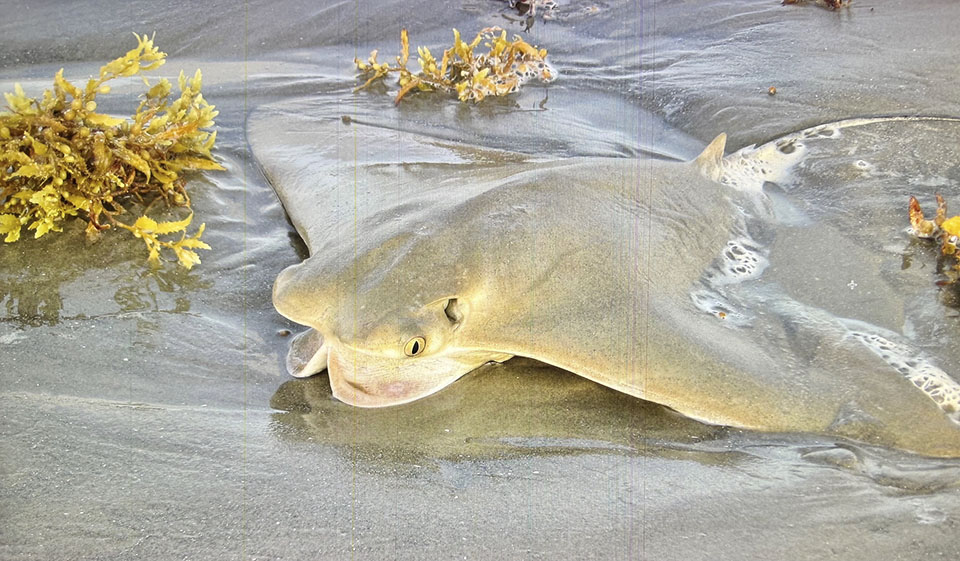
The third- a stranded cownose ray on the shore (see photo). These rays eat bean clams and follow them up and down the shore with the tides, and when the water is clear, you can actually spot them in the shallow water as they move about in search of bean clams. This one got a little too close to shore and stranded. The good news- I watched and before long, an incoming wave washed over the ray and it swam away.
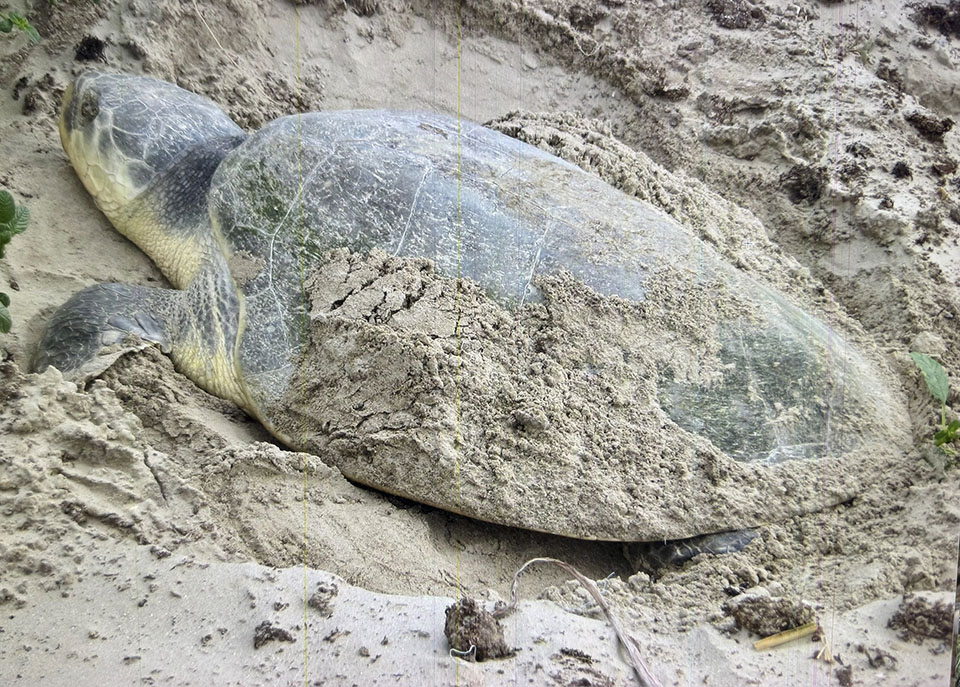
| Nesting Female Kemps Ridley Sea Turtle | Steve Alexander |
The last- my favorite- a nesting female Kemps Ridley sea turtle (see photo). I came upon her tracks as I walked the East Beach area while on sea turtle patrol. I followed the tracks up to the dunes and spotted her as she was throwing up sand over her eggs. When done, she wasted no time, turning and heading back to the water.
Over 40 years, I’ve walked a lot of beaches and seen some amazing sights, yet hope there are more yet to see. As for you, I wish many beach walks in your future and hope your own sightings are both amazing and rare!
Eco-Art Kayak Adventure
Eco-Art Kayak Adventure
Steve Alexander
Steve Alexander teaches wetlands management at Texas A&M University at Galveston and is a former member of the Board of Directors of the Galveston Island Nature Tourism Council. He is the author of Exploring Galveston: A Naturalist's Guide to the Island.